Rebuilding the Site Behind 27 Programs
The Foster & Adoptive Care Coalition is a St. Louis nonprofit that recruits and supports foster and adoptive families, with more than 27 programs serving children impacted by foster care. Its best-known program, Holiday Little Wishes, lets the community grant a holiday gift to a child in care. In 2024 the Coalition received nearly 4,600 wishes, its most ever.
How do you rebuild a website that can’t break?
For more than a decade Seafoam kept the Coalition’s old website running, along with the Salesforce syncs behind Little Wishes. In 2025 the Coalition asked us to replace it with a site that matched the warmth of the mission and that their own team could run.
Capabilities used
The Challenge
The old site wasn't built by Seafoam, and years of add-ons had turned it into a patchwork of plugins and pages. It still had to do serious work. Donations, tribute gifts, Little Wishes and Birthday Buddies all ran through a WooCommerce checkout that synced every order to Salesforce, and that sync could not break.
And the people who most needed the site, prospective foster parents and caregivers in crisis, had to dig through 27 programs to find their next step.
Before and after
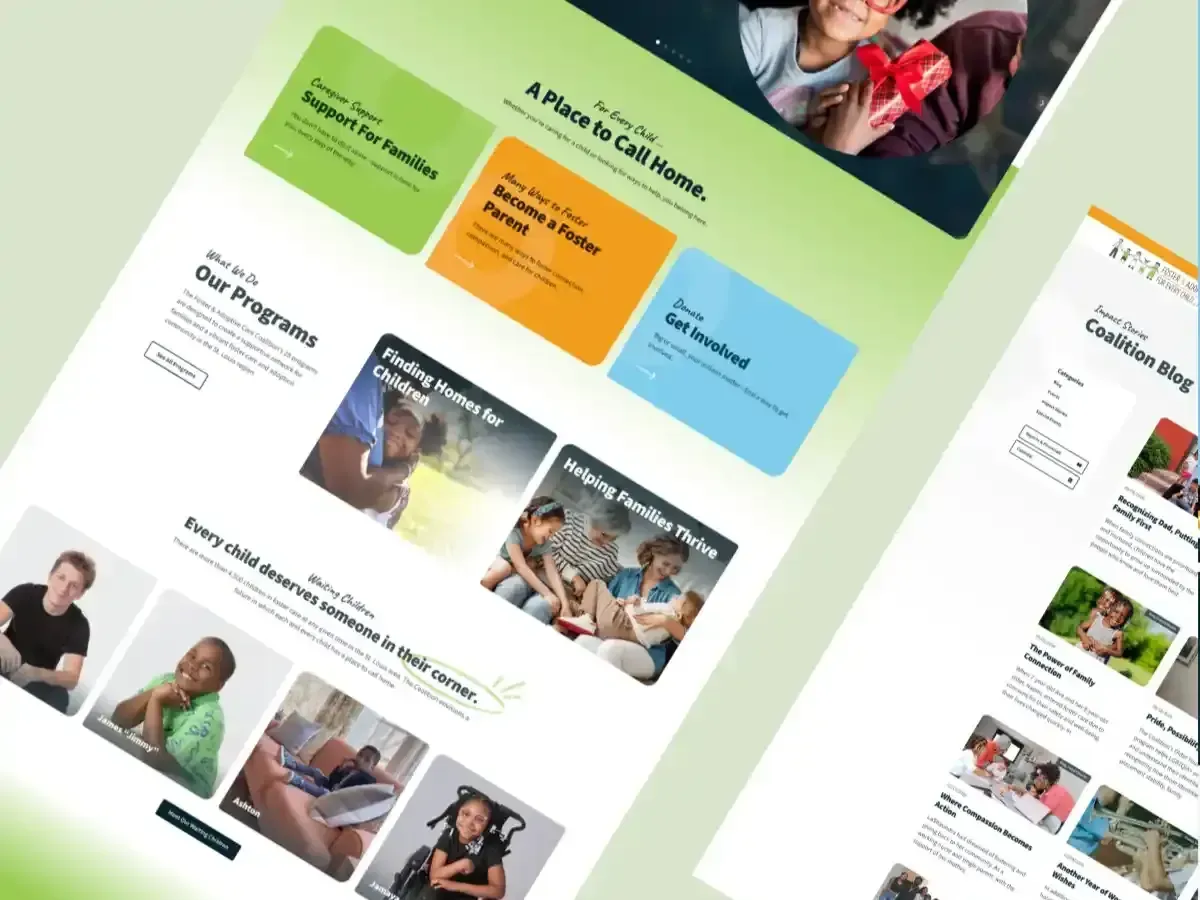
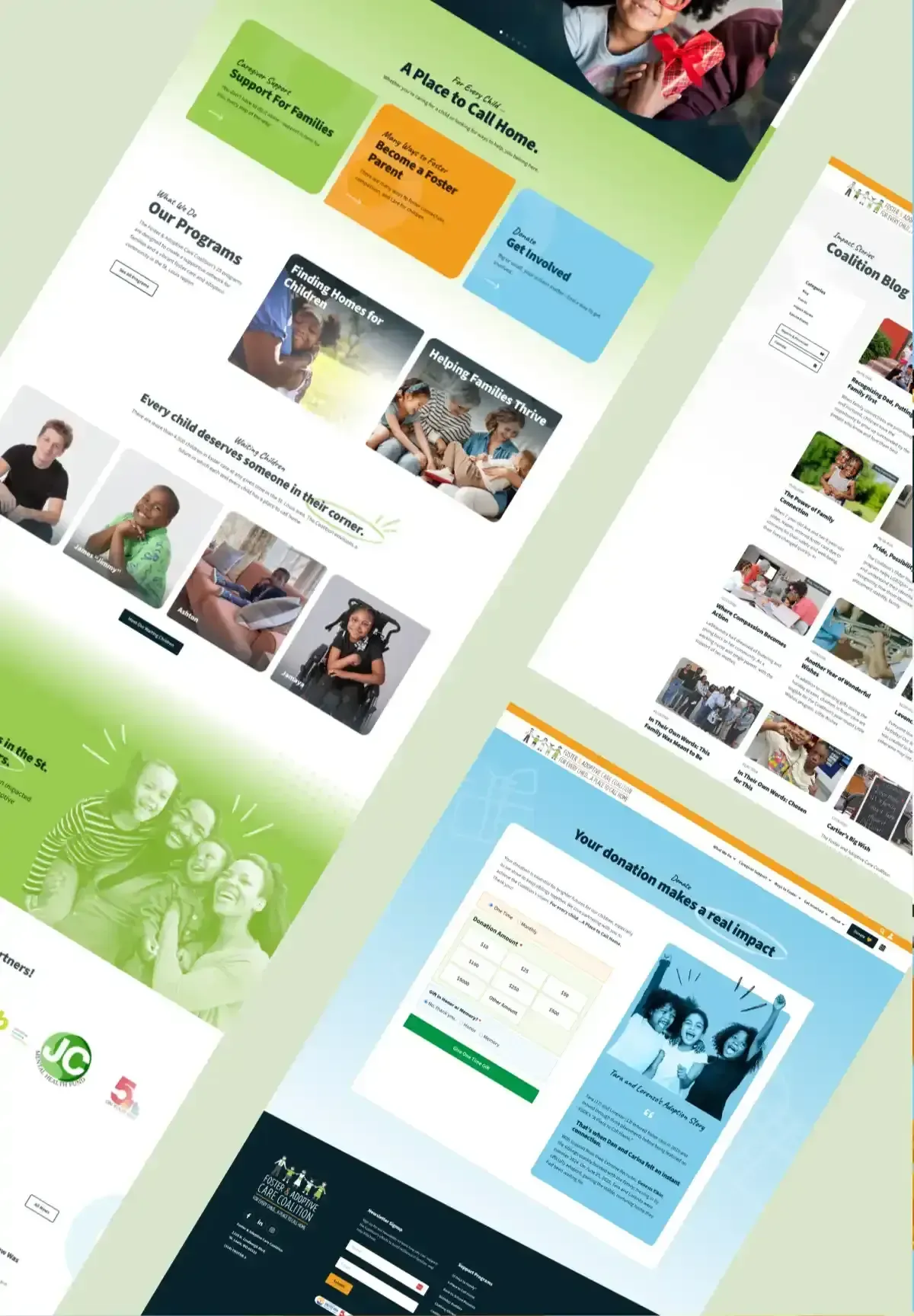
Same warmth. Now the website shows it.
Wish and donation pages that looked like an online store.
Little Wishes and Birthday Buddies told as stories about real children, not product listings.
Sub-programs that felt like separate sites.
ReFresh STL, the Institute and 27+ programs on one platform, each keeping its own identity.
Caregivers digging through 27 programs for a next step.
Clear paths for five audiences, from prospective caregivers to donors.
Several forms living off the site.
Every form on the site, mapped field by field to Salesforce.
A patchwork only an outside vendor could change.
A site the staff update themselves, with a how-to guide and training videos.
Nothing the Coalition depends on broke. The checkout, tribute donations and Salesforce sync all came across, and all of them were rebuilt and upgraded on the way.
What we built
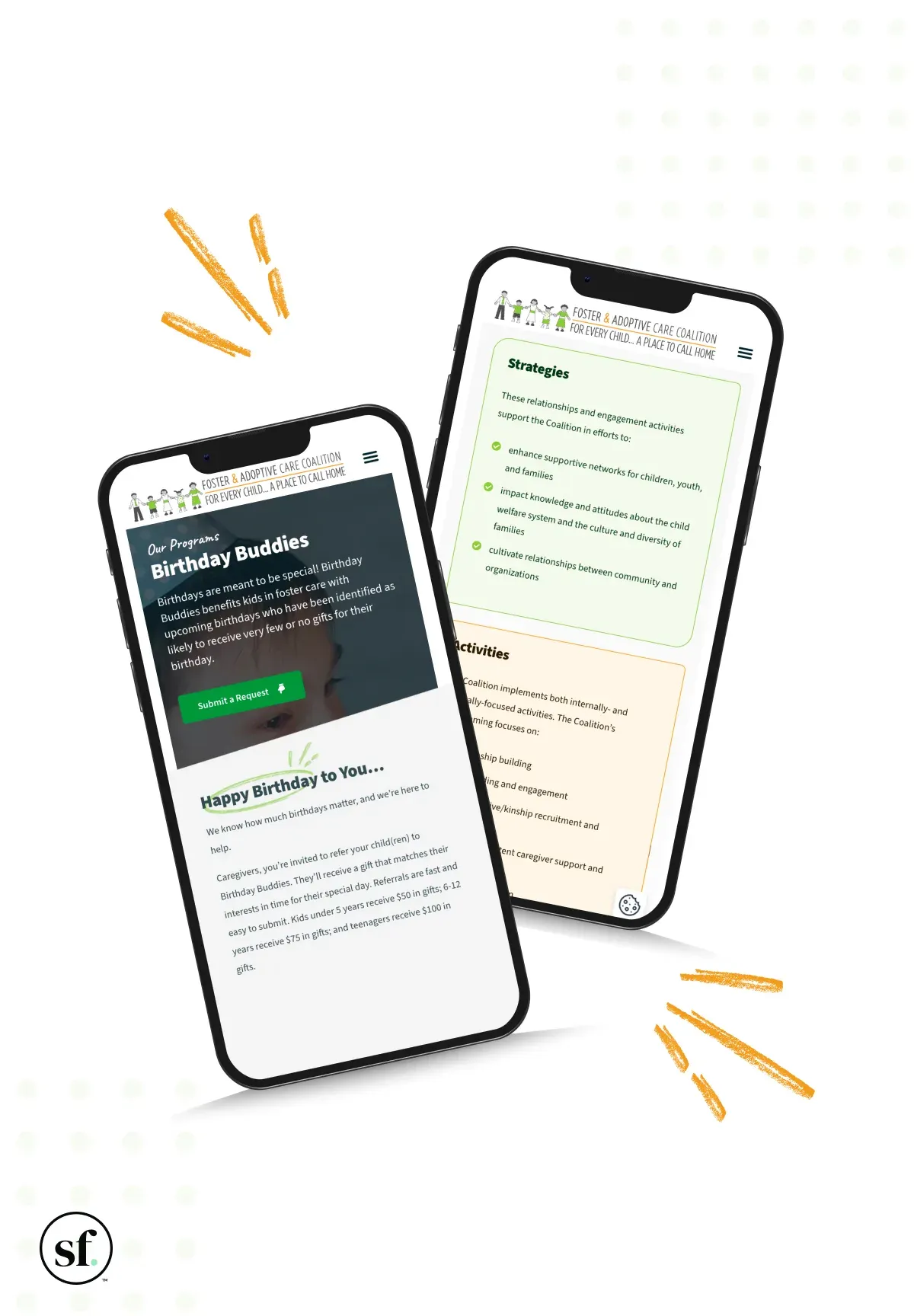
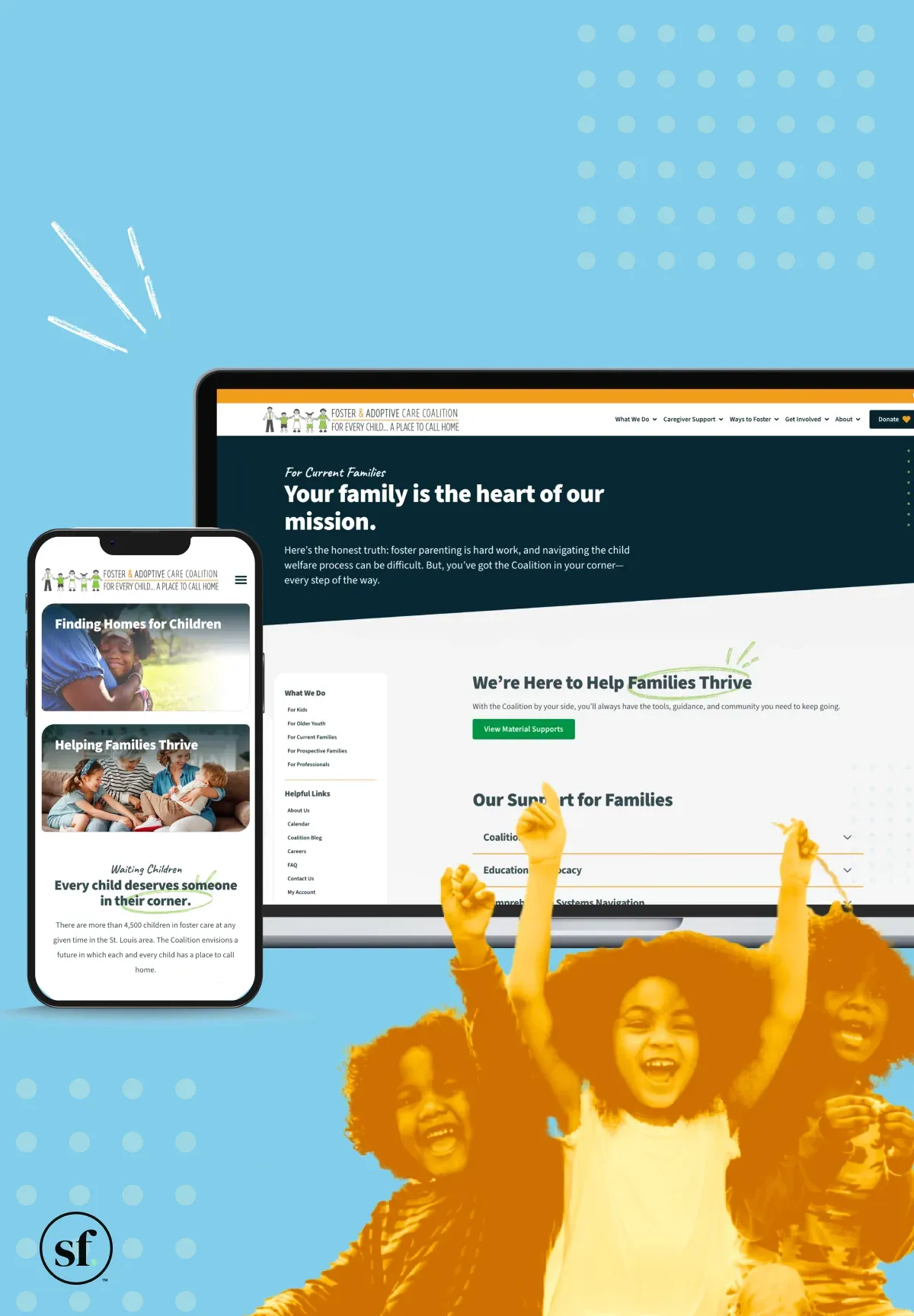
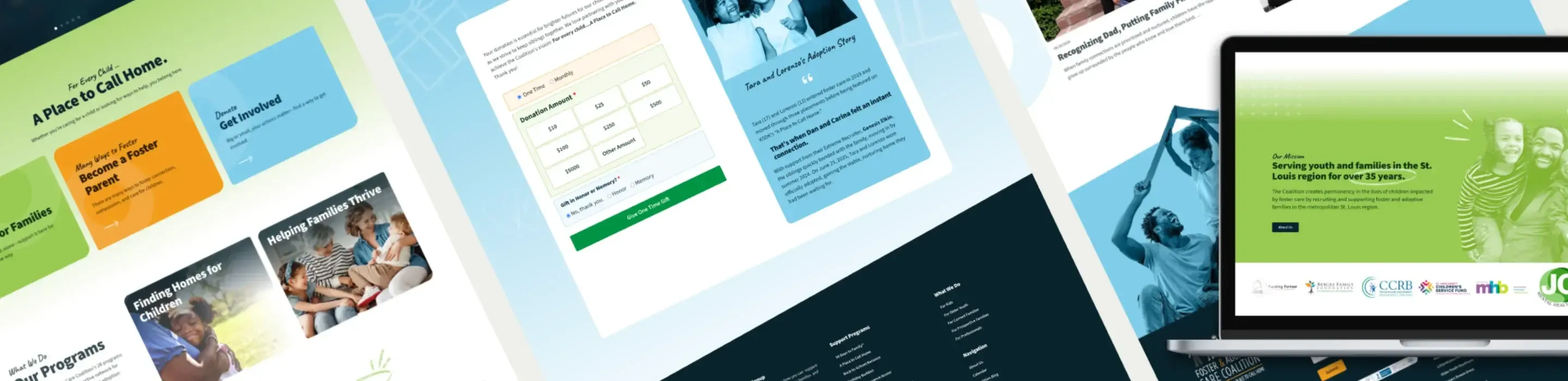
One platform, from the first visit to the gift that reaches Salesforce.
- 01 / Revenue strategy
What can't break?
Donations, tribute gifts, Little Wishes and Birthday Buddies all run through one checkout that syncs every order to Salesforce. That path was protected first.
- 02 / Brand strategy
How should the site feel?
A stakeholder survey and a brand workshop in April 2025. The design brief came from the Coalition's own words, stories and impact, not transactions.
- 03 / Marketing strategy
Who is the site for?
Five audiences, from prospective caregivers and current caregivers who need help now to volunteers, donors and professionals, with a site map built around what each comes to do.
- 04 / Channel strategy
How do people find it?
An SEO strategy, keyword clusters and a redirect plan carried the old site's search equity over to the new one.
- 05 / Execution
What does a family see?
Real photography, children and families ahead of products, and accessibility built to WCAG 2.1, on WordPress with custom content types the team runs themselves.
- 06 / RevOps and reporting
Does every gift land in Salesforce?
Checkout, tribute gifts and every form mapped field by field with the Coalition's Director of Information Systems, and an admin cleared of about 22,000 legacy orders and 4,000 old accounts.
What changed
Fast, on a heavy site.
Content starts appearing in under a second and the full page is visible in 2.3 seconds, inside Google's "good" range. Layout shift measures 0.001, a hundred times better than Google's bar. All of that while running a store, a checkout, an events calendar and live donation flows.
What this actually was

Protect what pays for the mission first, the checkout and the Salesforce sync.
Build every page around the person who needs it, not the org chart.
Hand the keys to the team, with the guides and videos to use them.
For more than ten years we kept the old site running. The rebuild is what that history makes possible, a partner who already knew every sync and every program before the first wireframe.